
The essay opens by noting that every useful company rests on research that was once deemed useless, and the author, a venture capitalist at Motive Force, focuses on that early phase.
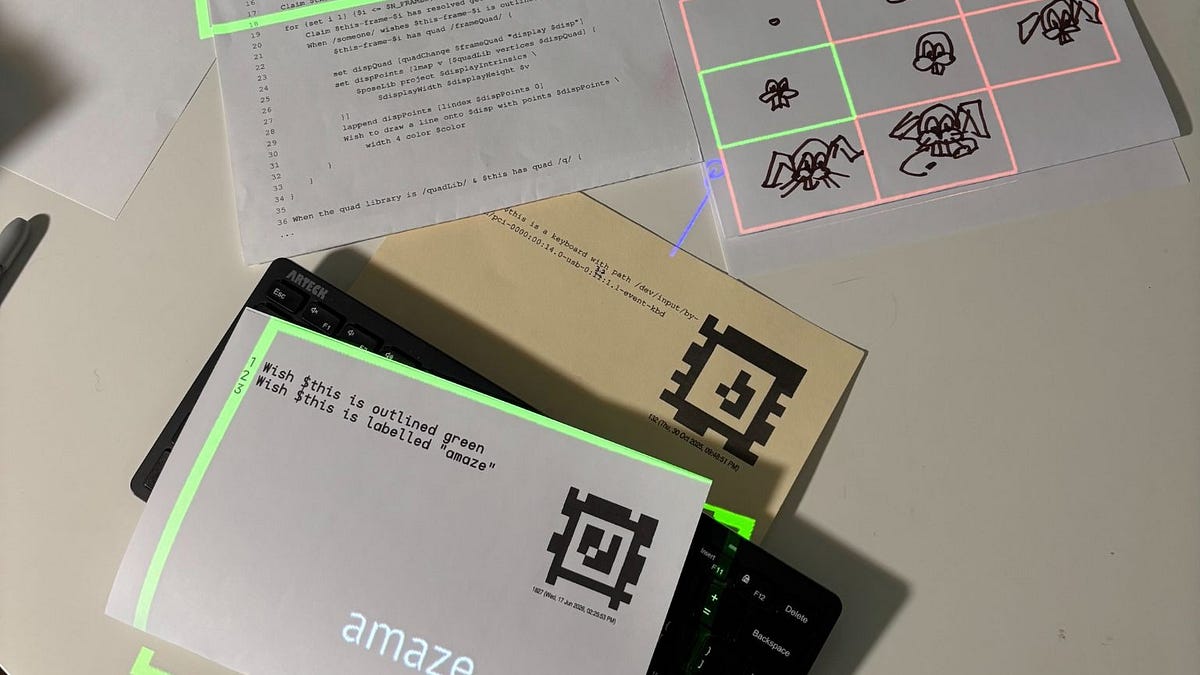
In June, the author witnessed a demonstration of Folk Computer in a Brooklyn warehouse. The system runs code directly written on paper, projects onto walls, and uses ceiling cameras to track movement. Participants draw a bunny frame‑by‑frame, compose music with physical cards, and program the room as a whole, creating a highly embodied, collaborative coding experience.
Folk Computer is the culmination of a lineage that began at Xerox PARC in the 1970s with Alan Kay, continued through the secretive Communications Design Group funded by SAP and Y Combinator Research, and evolved into the nonprofit Dynamicland in Oakland. Researchers Omar Rizwan and Andrés Cuervo, former Dynamicland staff, pivoted the project to open‑source, publishing code on GitHub.
The shift to an open‑source model democratizes access: anyone canিলা set up a physical computing lab, contribute modules, or build new tools like a card‑based sequencer. This lowers the barrier that once confined experimentation to a few labs, enabling a broader community to innovate on the same foundational ideas.
Source: Hacker News · Summarized by HeadlinesBriefing