
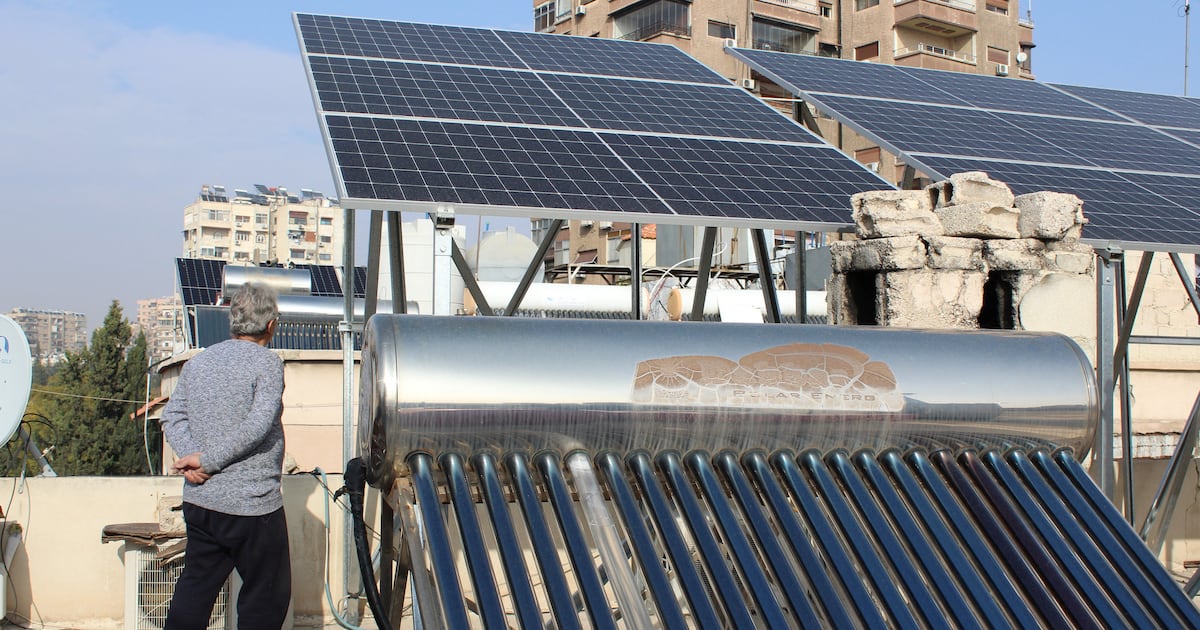
Damascus now hosts the most solar‑powered rooftops in the Middle East. After a decade of grid collapse, the city depends on about four hours of national supply and diesel generators. Cheap Chinese panels and batteries have flooded the market, turning every apartment, villa, and hotel into a power node. In 2010, Syria generated 45 TWh of electricity; the figure fell below 20 TWh by 2015 and has not recovered. Recent data from the International Renewable Energy Agency show off‑grid capacity rose from 249 MW in 2022 to 2 060 MW last year, making renewables a third of national output.
Distributed systems are simple to deploy. A 1.5–3 kW kit costs $2,500–$4,500 and can power lights, appliances, and farm pumps. Batteries keep the supply running at night, but they struggle with heating and heavy AC loads. Local engineers install the panels, and small “balcony” kits are sold in hardware stores for residents who lack roof space. The approach scales from individual households to entire apartment blocks, where facades can host additional panels.
Regional rivals—Lebanon, Yemen, Pakistan—have followed similar paths, while Gulf states keep solar mainly for large users. Siemens Energy’s push into Iraq and Syria aims to extend grid capacity, but many projects will take years to complete. In conflict zones, distributed solar accelerates rebuilding, cuts diesel use, and returns power control to communities.
Source: Hacker News · Summarized by HeadlinesBriefing