
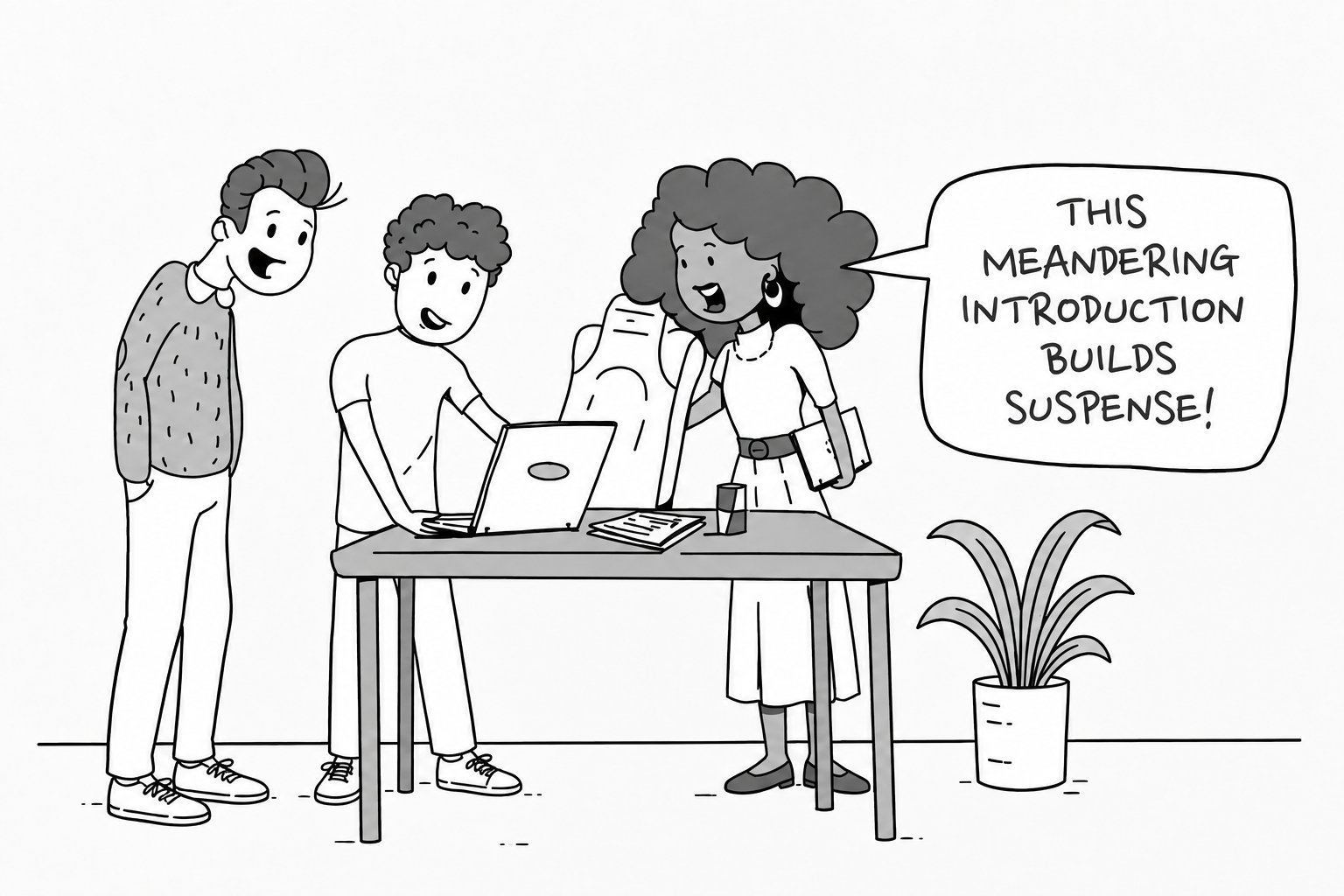
In software development, we collect anti-patterns to recognize common traits that lead to poor outcomes. I thought it would be helpful to do the same for software blogging, so I’ve catalogued the most frequent mistakes I see from beginner bloggers.
The most common mistake is meandering. Developers love specificity, so they start blog posts with backstory and historical context. That may be fun to write, but it’s not always interesting to read. From the reader’s perspective, there are a billion other articles they could be reading. Give yourself the title and the first three sentences to answer: Did the author write this for someone like me? How will I benefit from reading it?
Some bloggers write a compelling intro but clutter the reader’s path with extras like a subtitle, a bio, or an image. Everything you put in the reader’s path chips away at their finite supply of focus. Effective teachers compare new concepts to something the reader finds familiar. For example, if you were explaining Jellyfin, you might say, “Jellyfin is a streaming service like Netflix, except it’s open-source and private.” Minimize your assumptions about the reader.
When you write a blog post, think about your target reader. What do they know? Imagine a friend or teammate you know in real life. Write a list of terms they would recognize and terms they would not.
Source: Hacker News · Summarized by HeadlinesBriefing