
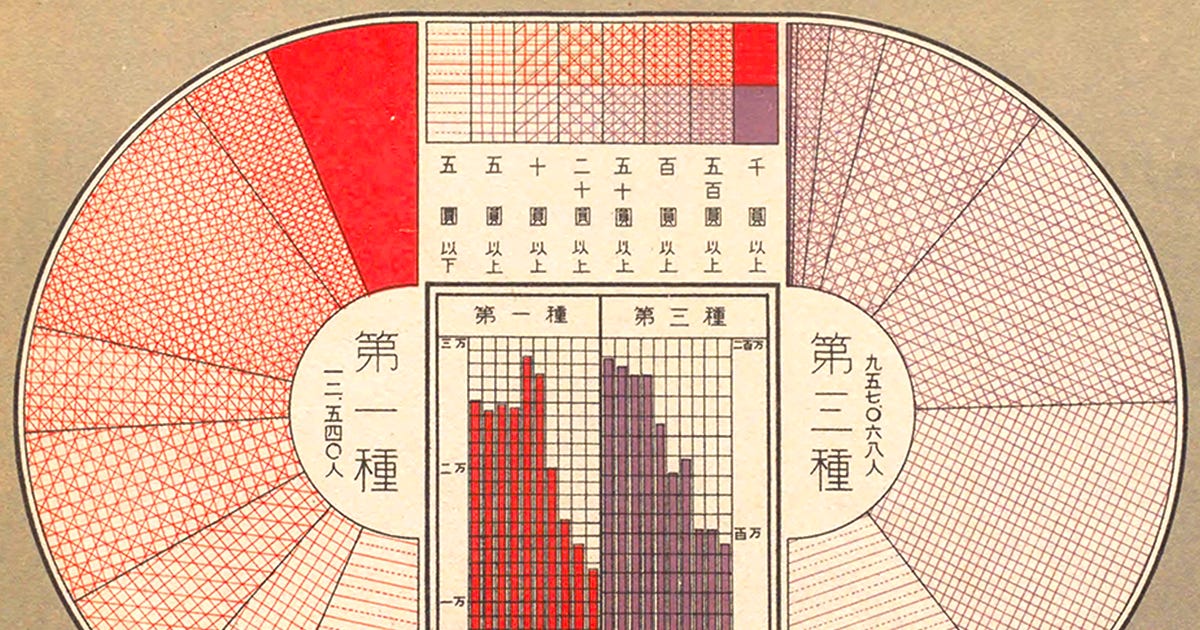
Kosho's labyrinthine marketplace for rare Japanese books became a gateway to 1920s statistical charts through AI-powered translation and metadata analysis. The author used OpenAI to decode cryptic listings, locate digitized copies in HathiTrust, and connect with the National Diet Library’s archives. This shifted rare-book collecting from a passive hunt to an active exploration of prewar Japanese statistical visualization. The process revealed coordinated efforts to popularize data literacy through exhibitions like the 1925 Cabinet Statistical Exhibition, which merged government data with public education.
The National Diet Library’s digitized archives proved pivotal. By cross-referencing AI-translated descriptions with high-quality scans, the author evaluated over a hundred chart books. Only 25% of pre-1930 titles had usable scans, and fewer than 10% met the criteria for meaningful acquisition. The challenge wasn’t scarcity of material but the friction of verifying authenticity and condition through fragmented listings. AI handled transliteration and bibliographic cross-referencing, but human judgment remained essential for assessing artistic merit. The 1925 Cabinet Statistical Exhibition book stood out, its charts reflecting post-earthquake urgency to visualize recovery data and promote efficiency.
Logistics complicated the acquisition of 19 volumes through Kosho’s network of dealers. Books were shipped via a Japanese forwarding service, adding delays and tariffs. Despite these hurdles, the scale of the purchase transformed the project from individual curiosity to archival significance. The Current Affairs Statistical Atlas set, though incomplete, became a cornerstone due to its density and creativity. This success underscores AI’s role not as a replacement for collectors’ taste but as a tool to amplify human judgment. The story isn’t about machines finding books, but about technology enabling deeper exploration of a niche yet culturally rich domain. The National Diet Library’s role in democratizing access to these charts remains a model for digital archiving.