
QA Wolf unveiled an AI agent that converts natural‑language prompts into Playwright and Appium scripts, then runs them up to 12x faster than competing computer‑use agents. The tool claims to map over 200 test cases in minutes, execute suites fully in parallel, and output open‑source tests that avoid vendor lock‑in. Developers can start testing complex user flows without manual scripting.
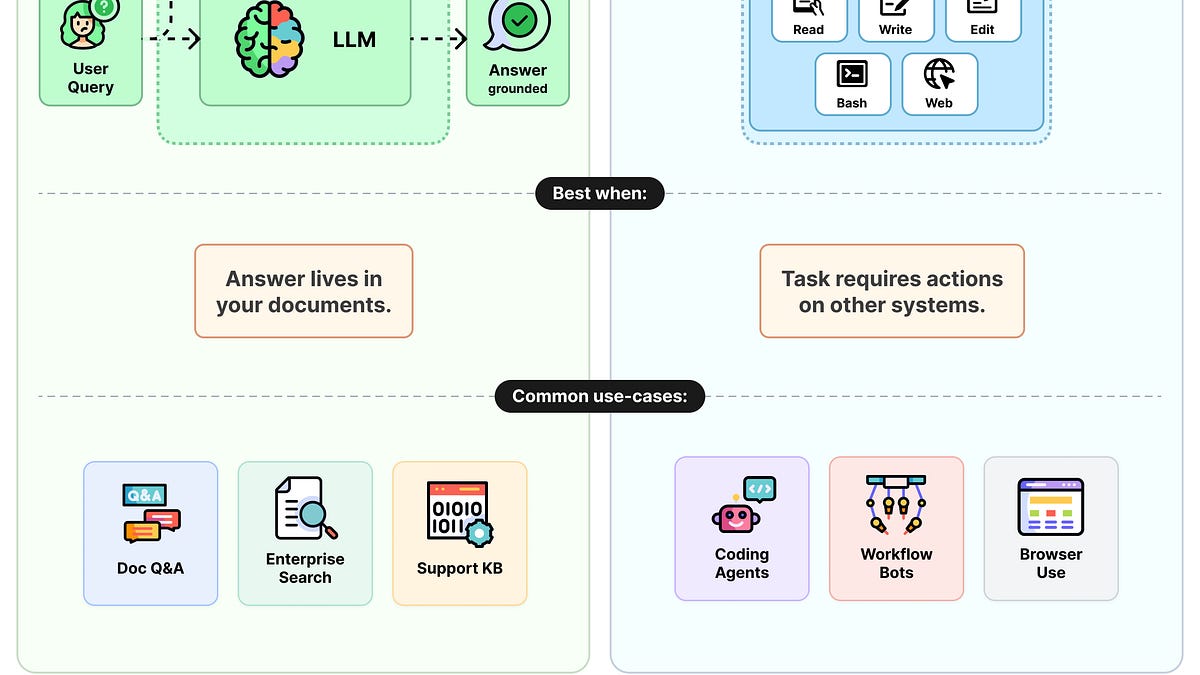
Retrieval‑augmented generation (RAG) anchors answers in existing documents through a four‑step pipeline: embed the query, fetch relevant chunks, paste them into the prompt, and let the LLM generate a grounded response. Agents, by contrast, embed the LLM in a reasoning loop that selects tools—read, write, bash—and iterates until the goal completes. Use RAG for static knowledge, agents for actions or orchestrate external services seamlessly.
To deepen practical skills, Build with Claude Code launches a two‑day intensive cohort on May 28, taught by Meta veteran John Kim. Participants will master the agentic loop, context engineering, and memory layers, then apply Claude Code to parallel development with Git worktrees and sub‑agents. The capstone requires shipping a functional feature on the learner’s own stack.
Source: ByteByteGo · Summarized by HeadlinesBriefing