
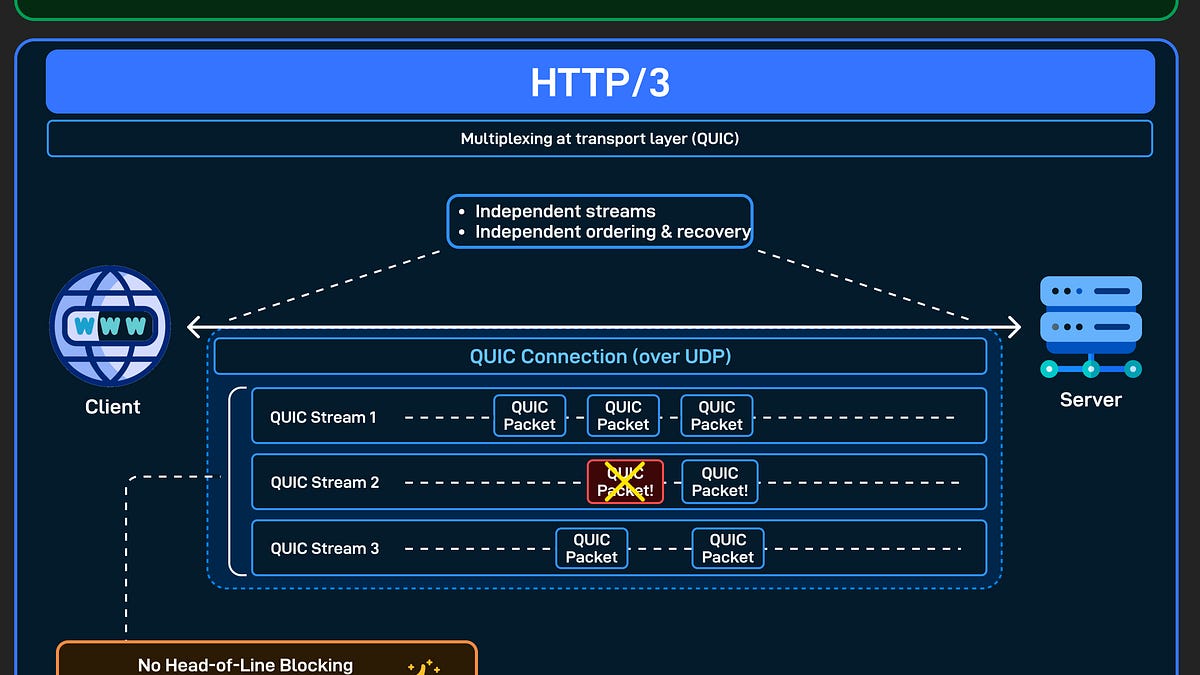
ByteByteGo's newsletter dives into the differences between HTTP/2 and HTTP/3, focusing on the transport layer. While HTTP/2 improved upon HTTP/1.1 with multiplexing, it still relies on TCP. This means that TCP head-of-line blocking can occur, where a single lost packet blocks all streams sharing the same connection, impacting performance.
HTTP/3 takes a different approach, utilizing QUIC over UDP. QUIC moves multiplexing into the transport layer, allowing individual streams to handle packet loss independently. If a packet is lost, only the affected stream waits, while others continue. This architecture offers a more efficient and resilient experience, especially in lossy network conditions.
The article also touches on other system design topics, including how Cursor Agent works, Git's internal data storage, NAT, and building a computer vision app on Ring APIs. The discussion on HTTP/3 and QUIC highlights a shift towards more efficient and performant web protocols, crucial for modern applications.
Moving forward, the adoption of QUIC is expected to increase as it offers improved performance and reliability. Developers should be aware of these fundamental architectural differences when designing and optimizing applications. As network conditions vary, QUIC's benefits become more apparent, making it a key technology to watch.