
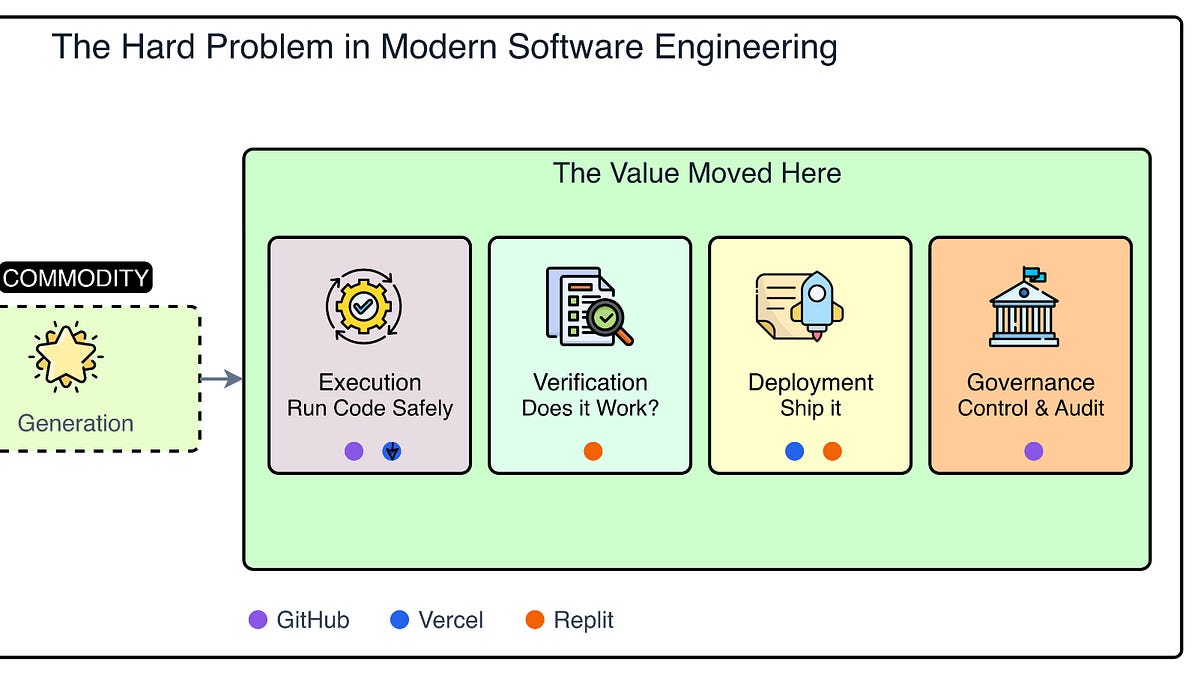
AI models now solve writing code, producing functions or apps from plain language in seconds at low cost. This shifts platform economics—code generation is no longer a differentiator. GitHub, Vercel, and Replit rebuild around other hard problems.
Three questions matter: Where does the AI run its code? How does the platform verify it works? How does the product reach production? GitHub orchestrates via ephemeral environments and a control layer (Agent HQ) that routes tasks across competing agents (Anthropic, OpenAI, Google) within pull request workflows.
Vercel bets on production: its v0 sandbox runs on Firecracker micro VMs, imports real GitHub repos, and enforces deployment controls to prevent credential leaks. Replit focuses on verification with a self-testing loop that drives a real browser to catch fake-working code.
All three now support the MCP standard, letting agents reach any tool. Stripe turned payments into an agent-setupable workflow with secure credential design. Cheap code generation moves the hard problem to orchestration, production, and verification.
Source: ByteByteGo · Summarized by HeadlinesBriefing